FCU Hybrid Monitor
Built a touch panel that monitors a fan coil unit end to end — water condition, indoor air quality, energy cost and maintenance tasks — on an ESP32-S3 board that evaluates thresholds locally and speaks BACnet/IP.
Overview
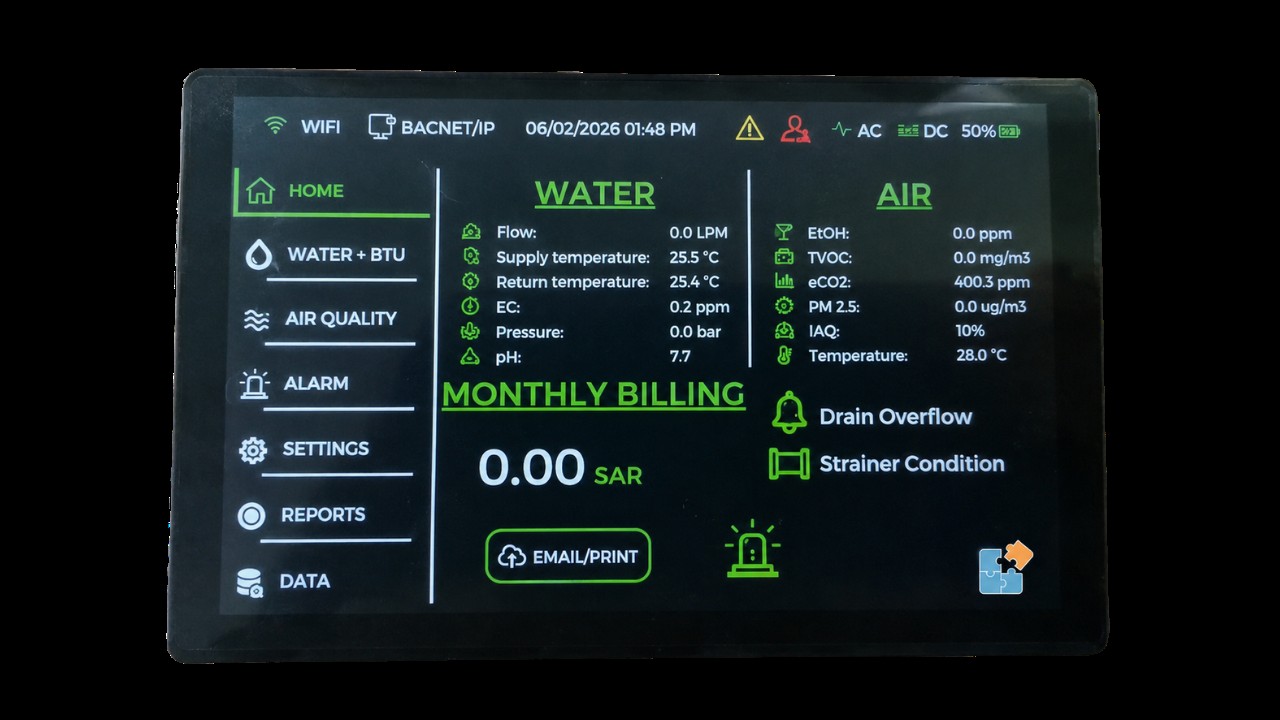
Fan coil units are normally watched by instruments that do not talk to each other, plus a maintenance sheet nobody can query. The FCU Hybrid Monitor puts water, air, cost and service tasks on a single panel, so an operator can answer one question at a glance: is this unit healthy right now, and is it costing what it should?
Highlights
- One touch panel for water, air, energy and maintenance, in English and Arabic
- ESP32-S3 board carrying display, compute, sensing and network on a single PCB
- Per-parameter thresholds with Normal, Warning and Critical states
- Alerts that carry a recommended action, not just a reading
Challenges
- Water, air, energy and maintenance each lived on a separate instrument or a paper sheet.
- Building meters rarely show what a single fan coil unit actually costs to run.
- An operator crossing a plant room needs to see which parameter tripped from a distance.
- Service schedules tracked on paper leave no record of what was actually done.
Solutions
- Brought display, compute, sensing and networking onto one ESP32-S3 board, with the sensor interfaces on a single pogo-pin connector.
- Accumulated energy in kWh on the device and turned it into a running monthly cost figure in SAR.
- Flashed the outline of a tile rather than the reading, so a tripped parameter stays readable from across the room.
- Closed the maintenance loop on the panel itself: detect, raise a task, complete it, then feed compliance into the monthly report.
Features
- Water: flow, supply and return temperature, pressure, EC and pH
- Air: EtOH, TVOC, eCO₂, PM 2.5, IAQ and temperature
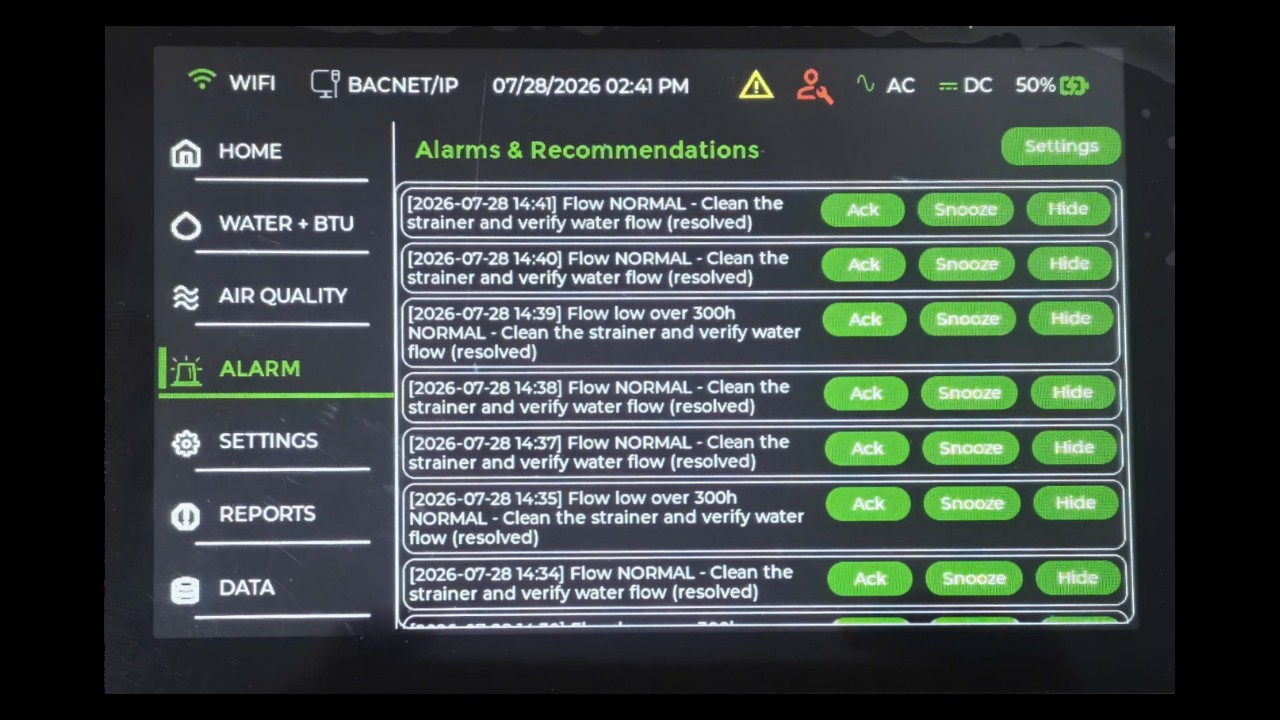
- Alarms with Ack, Snooze and Hide on every row, with the record kept
- Monthly report covering cost, energy, alarm history and maintenance compliance
- Email or print straight from the panel, with no laptop in the loop
Key Results
- Replaced separate rounds for water instruments, air readings and the maintenance sheet with one panel.
- Turned ventilation problems into a reading with a recommended action instead of an occupant complaint.
- Every capability shown runs in the firmware currently on the device.
Every fan coil unit is watched by instruments that do not talk to each other, and by a maintenance sheet nobody can query, so there is no single answer to whether the unit is healthy and whether it is costing what it should.
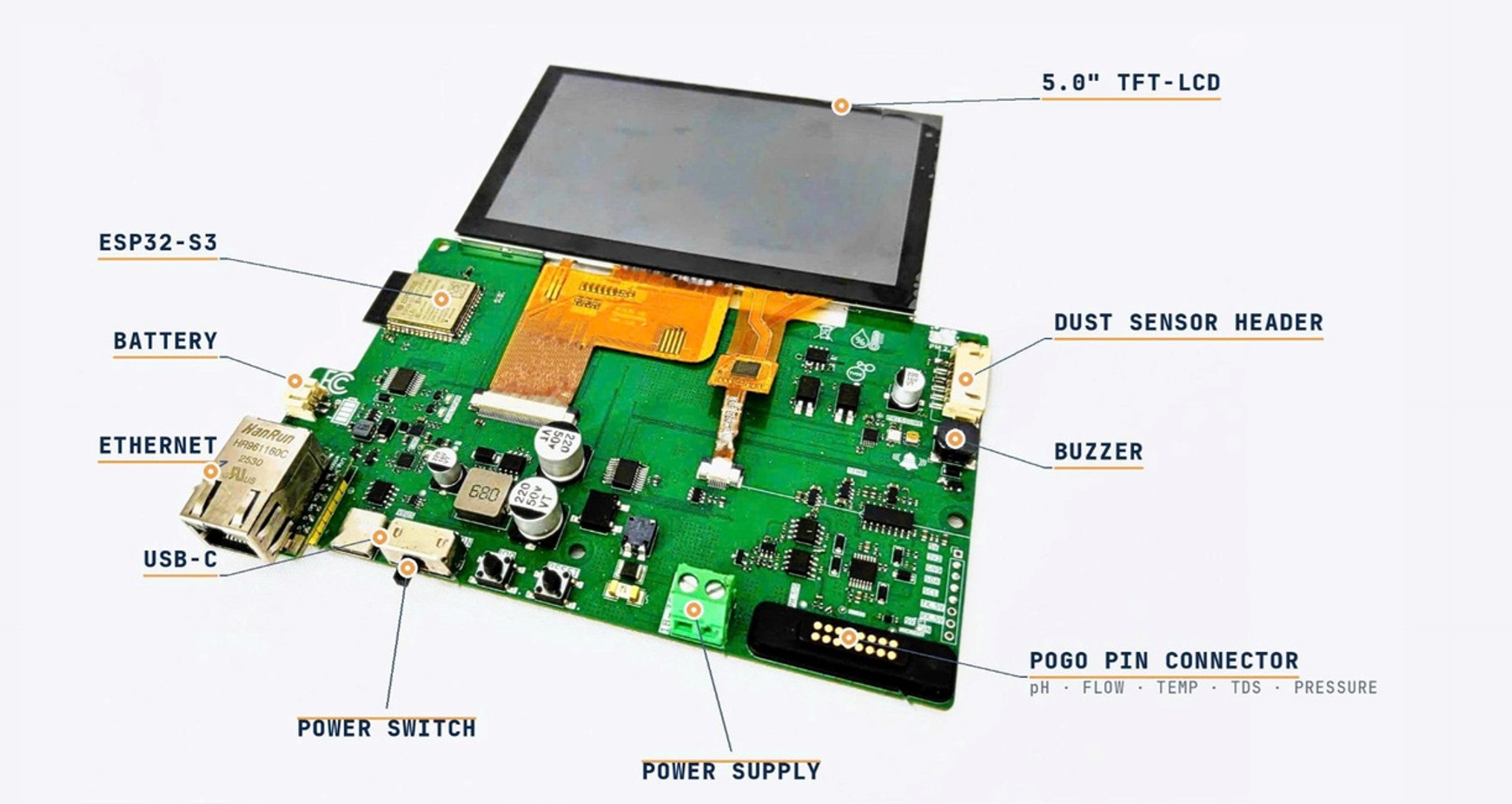
An ESP32-S3 drives the panel, integrates energy, evaluates thresholds and speaks BACnet/IP, with pH, flow, temperature, TDS and pressure brought out on a single pogo-pin connector.
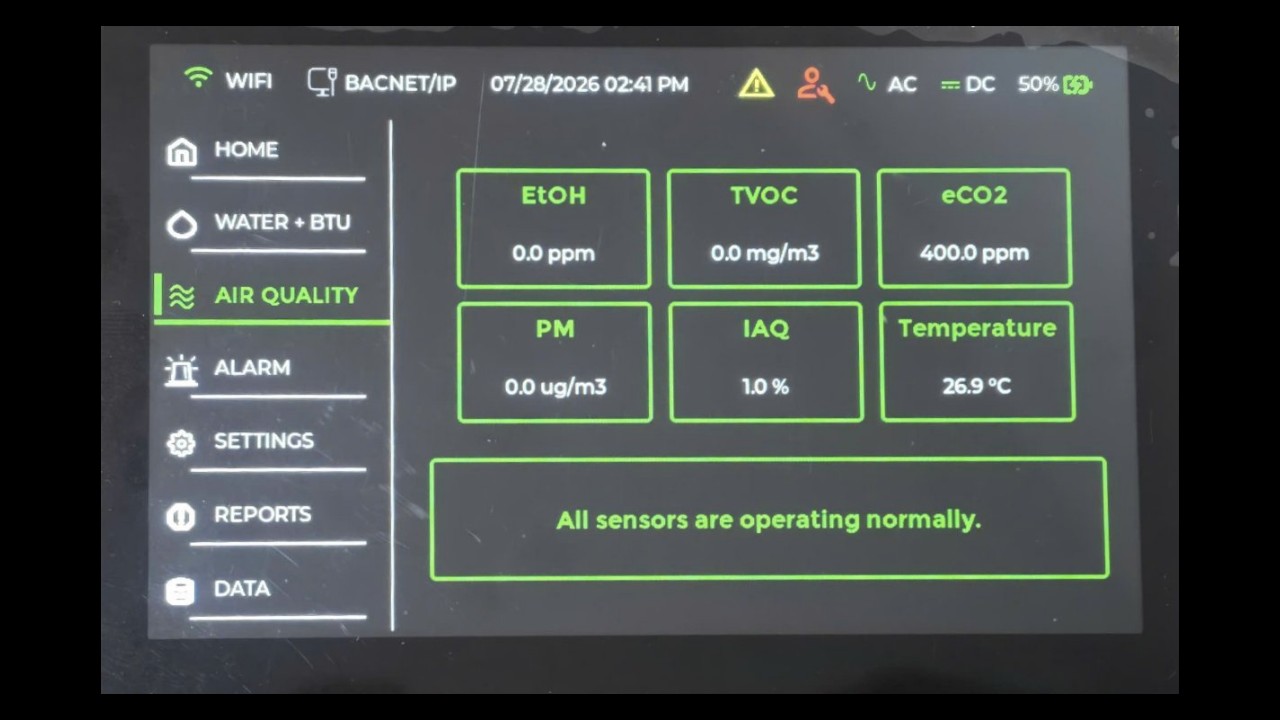
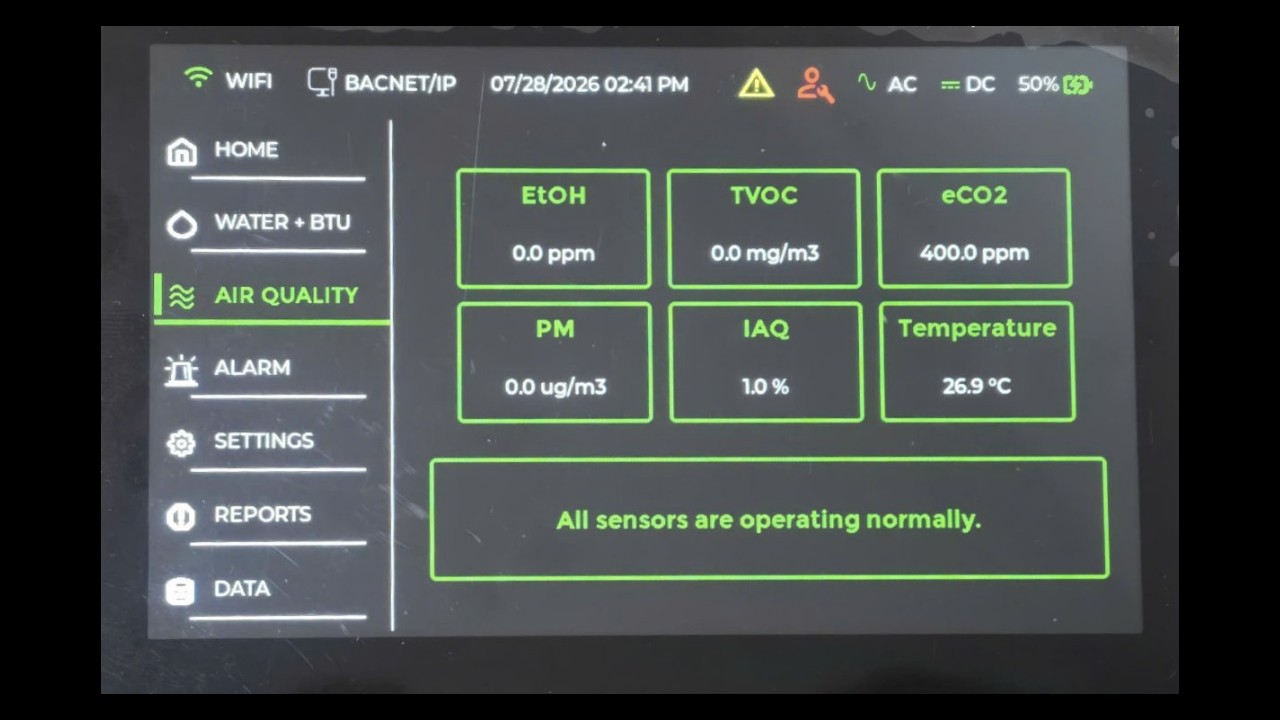
Six air parameters and the water readings each carry their own threshold, colour state and alert message, and the tile outline flashes rather than the value so a tripped parameter stays readable at a distance.
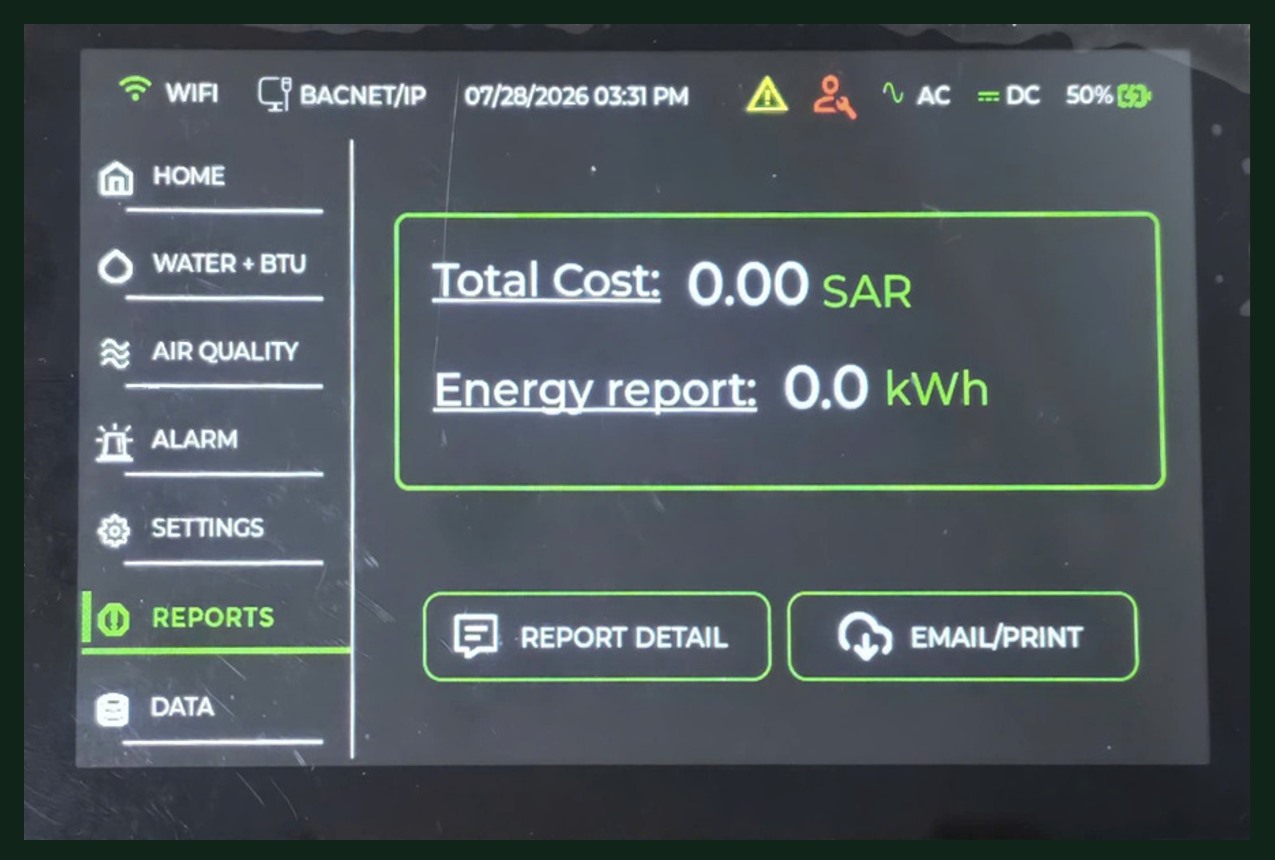
The monthly report pulls cost, energy, alarm history and maintenance compliance together, and can be emailed or printed straight from the panel.
A closer look
One board: display, compute, sensing and network
An ESP32-S3 drives the panel, integrates energy, evaluates thresholds and speaks BACnet, with pH, flow, temperature, TDS and pressure brought out on a single pogo-pin connector.
Flow, temperature, pressure and energy as one system
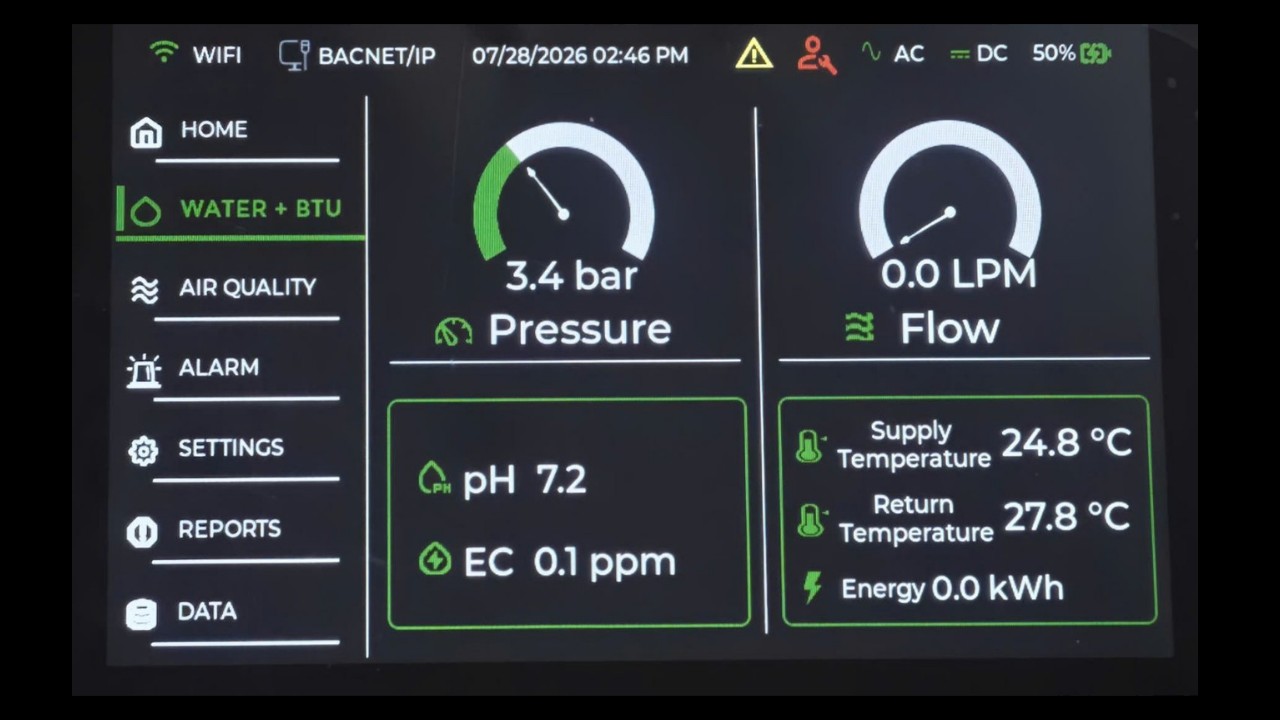
Live gauges for pressure in bar and flow in LPM, supply and return side by side — the difference is what drives the energy figure — with pH and EC on the same screen.
Air quality, all clear
Six parameters, each outlined in green with a single confirmation line while everything sits inside its threshold.
Air quality, threshold triggered
Only the affected sensors turn amber, and the outline flashes rather than the reading, so an operator can see which parameter tripped from across the room.
Alarms that carry a recommendation
Time, sensor, state and the recommended action on one line, with Ack, Snooze and Hide on every row; hiding an entry clears the screen but keeps the record.
Cost and energy in two figures
Total cost in SAR and energy in kWh, with month-by-month detail, alarm history and maintenance compliance behind them, emailed or printed from the panel.